Where Is a Transfer Switch Installed?
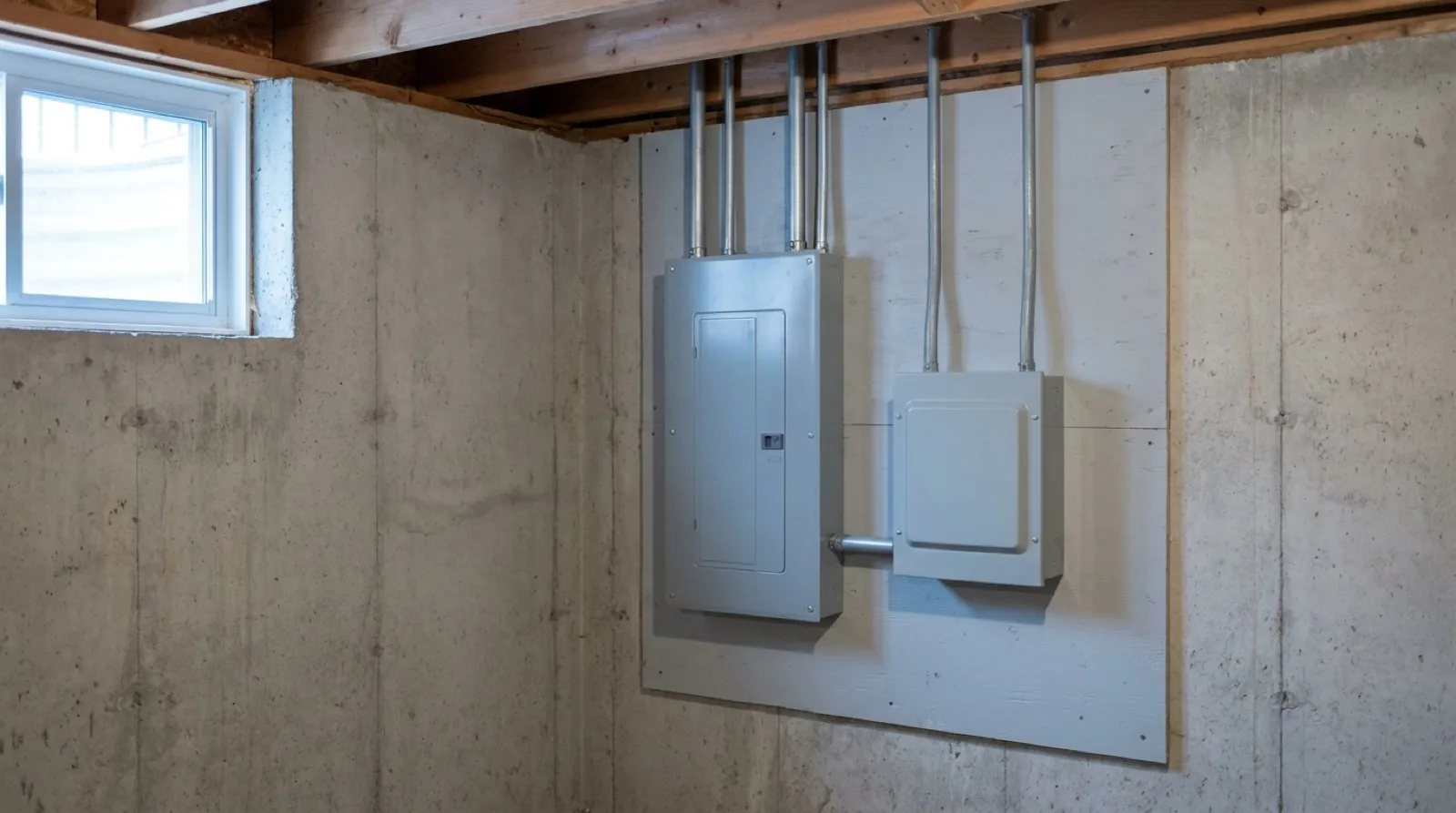
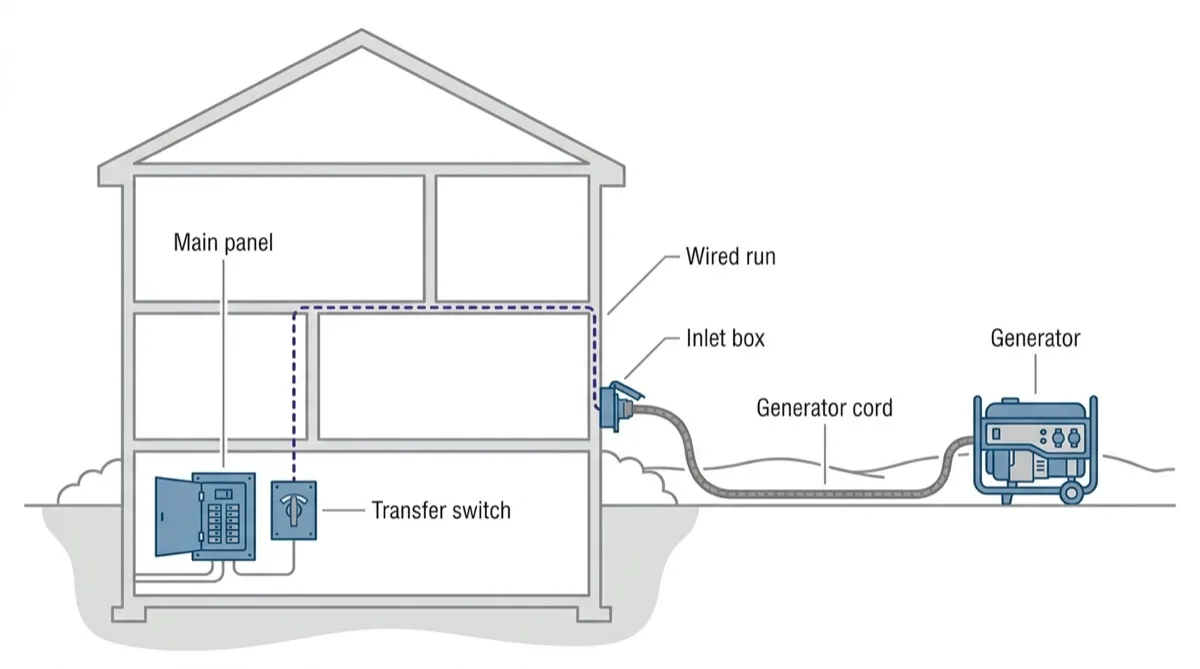
A transfer switch is installed at or beside the main electrical panel, because its job is to decide whether the house draws from the utility or from the generator, and never from both. The generator itself stays outdoors and plugs into an inlet box on an exterior wall. The run between those two points is what a placement quote is really pricing.
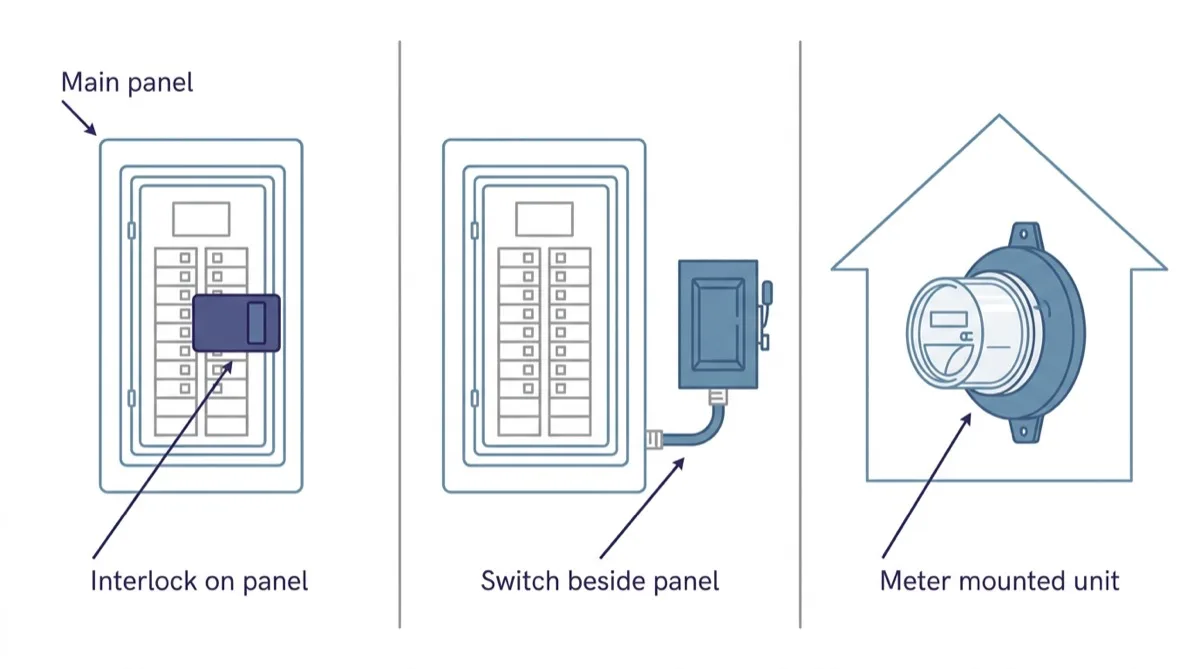
Draper Electric's installation guide says to pick a dry, accessible spot near the electrical panel. The switch goes where the supply meets the circuits, and that is the panel. How much hardware ends up there depends on the type. Kolji Bros. Electrical's Ontario pricing guide lists an interlock kit at $400 to $800 and describes it as a way to switch between utility and generator power at the main panel. An interlock is fitted to the panel itself rather than set in a box of its own. The same guide lists a manual transfer switch at $800 to $1,500 and describes it as a dedicated switch panel with selected circuits.
That panel takes wall space beside the main panel, and the chosen circuits are wired over to it.
An automatic transfer switch is the larger piece. Kolji Bros. Electrical lists it at $1,500 to $3,000 among its switch types. The installation cost breakdown on the same page carries an automatic transfer switch line at $800 to $2,000, so ask a contractor which of the two scopes a quote matches. The trade-offs between the manual options are laid out in transfer switch or interlock kit.
The Electrical Safety Authority (ESA), Ontario's electrical safety regulator, sets the rule that makes the switch necessary. Its generator safety page says a standby generator permanently connected to home wiring must have a transfer device, so generator power cannot flow back into the utility system.
The Inlet Box and the Cord Set the Outdoor Half
The generator runs outdoors. GenerLink Canada's FAQ is blunt about it: a generator should never be operated inside, including basements, crawl spaces and attached garages. That is where the second half of the placement question comes from. A portable setup needs an inlet box, a weatherproof connector on an outside wall that the generator cord plugs into, with a wired run from it back to the switch.
Draper Electric, a contractor in Braeside, Ontario, prices that inlet box at $20 to $100 as a component. Canadian retailer Raysolar sells a 30-amp generator inlet box at $103.87, just above Draper Electric's range. The transfer switch installation cost page holds the component rows this section draws on.
The cord is where distance turns into money in the most visible way. Draper Electric prices a heavy-duty power cord, running from the generator to the inlet box, at $30 to $350. A generator standing close to the house needs a shorter cord, but the spot also has to meet the manufacturer's clearance rules. RenoHouse's Toronto standby generator guide lists manufacturer setbacks that include 60 inches from any door, window or fresh-air intake, so the shortest run is not always an available one. Most of the placement decision is settled by those two limits before anyone quotes the wiring.
What the Labour and Panel Access Add
Draper Electric prices transfer switch installation labour at $200 to $500, separate from the equipment, and says most installations take 2 to 4 hours. The things that stretch a job are physical: how far the run has to travel from the panel to the exterior wall, whether it passes through finished space, and whether the existing panel is old or crowded.
Hourly rates matter when a job is not simple. Draper Electric's page says electricians typically charge $50 to $130 per hour, plus a $75 service call fee. Amps Logics Electric's 2026 GTA guide puts standard residential work at $95 to $140 per hour. A panel in a finished basement behind storage is a different job from a panel on an open utility wall, and the electrician rates page shows how the GTA market prices that time. The switch hardware does not change; the access does.
Panel space is the other limit. A manual switch needs circuits moved out of the main panel into its own enclosure, so the job depends on how the existing panel is filled and labelled. RenoHouse prices a 60-amp to 100-amp sub-panel addition in Toronto at $800 to $2,000, and its panel upgrade cost figures sit alongside other Toronto panel work. None of this is visible from outside a closed panel cover, which is why quoting tends to start with someone taking the cover off.
Where Automatic Switches Are Mounted
A standby generator that starts itself needs a switch that acts with nobody home, and that hardware sits differently. RenoHouse's Toronto guide describes two types:
- a service-rated automatic transfer switch, built to take the whole incoming supply, which it calls the most common type in Toronto and places between the utility meter and the main panel
- a sub-panel automatic switch, placed between the main panel and a dedicated critical-loads sub-panel, a smaller panel that holds only the essential circuits
RenoHouse prices a 200-amp service-rated automatic transfer switch with a load-management module at $1,400 to $1,800 as part of a Toronto standby project. Load management, in RenoHouse's description, sheds non-essential heavy loads such as an EV charger, an electric range or a dryer when the air conditioner or heat pump starts. The same guide says the switch may be mounted in a finished basement or utility room. The full path from panel to switch to generator is traced in how a generator ties into your panel.
With a standby unit, the generator pad, the gas meter and the panel all pull on the same decision. RenoHouse prices a 30 to 50 foot gas run from the meter at $1,200 to $2,200 and adds $500 to $1,000 for runs beyond 60 feet. Kolji Bros. Electrical's automatic switch and RenoHouse's service-rated switch describe overlapping but not identical scopes. Pin that down in any quote that names one price for the switch.
Where a GenerLink Goes Instead
There is one setup that skips the panel. GenerLink Canada describes the GenerLink as a meter-mounted transfer switch installed outside the home at the electric meter, so the generator cord connects at the meter rather than at an interior switch. The same FAQ tells buyers to measure the distance between the hydro meter and the spot where the generator will stand, and to choose the cord length from that.
Draper Electric lists a 30-amp GenerLink system starting at $1,650 and a 40-amp option at $2,449.99. GenerLink Canada says an install typically requires a licensed electrician and recommends contacting your utility for confirmation, so that call belongs before the purchase rather than after it. The placement consequence is that nothing new appears beside the panel, which matters in a house where the panel is boxed in or already full. For a household that will run a portable setup by hand, using a manual transfer switch in an outage covers the switching itself.
Reading a Quote That Names One Price
A single installed price for a transfer switch can describe several different scopes, and the Ontario sources this site collects split them differently. Kolji Bros. Electrical gives one figure per switch type. Draper Electric breaks the same work into pieces:
- the switch unit alone, manual or automatic, at $200 to $2,000
- labour at $200 to $500
- the inlet box, priced above
- the cord at $30 to $350
- electrical permits at $50 to $350
Setting Draper Electric's component list against a single bundled figure is one way to check whether two quotes cover the same work.
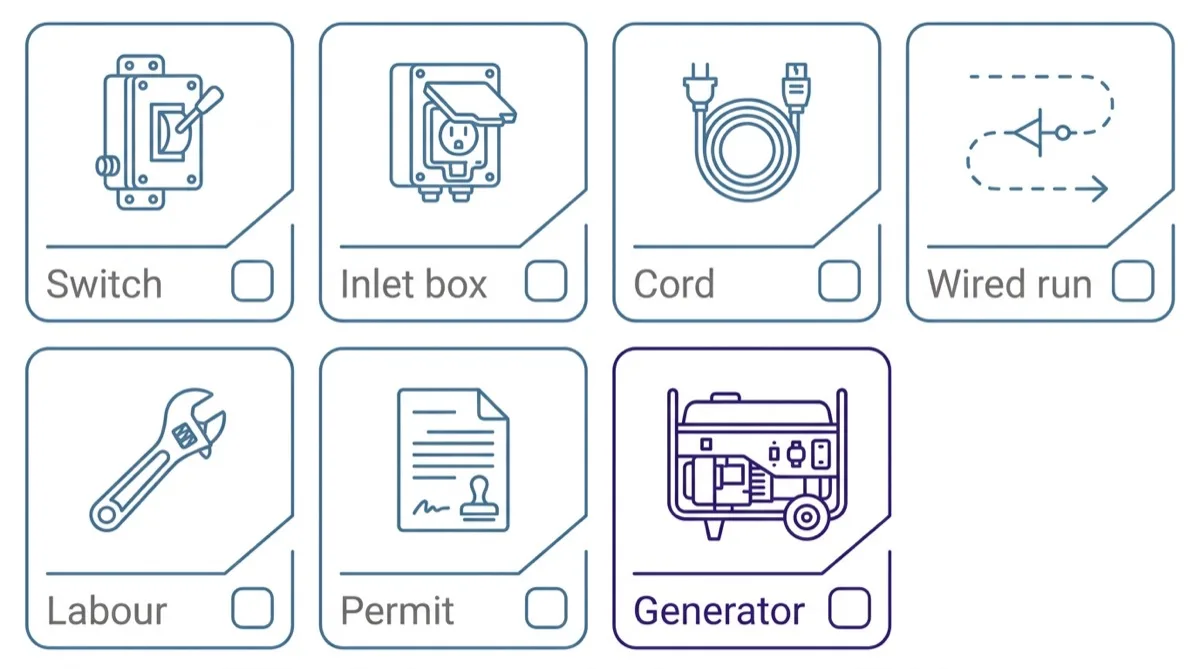
Some quotes go wider still. Draper Electric lists generator and switch combos that begin at $3,999 for select circuit setups and go up to $7,999.99 for whole-house systems. Those include the generator itself, so a package price is not comparable to a switch installation price. Most of the confusion is settled by one question: which physical items does a number cover? Check it against this list:
- the switch
- the inlet box and the cord
- the wired run and the labour
- the permit
- a generator on top of all of it
Who in This Index Lists Transfer Switch Work
Of the 480 companies in this index, 8 carry the transfer switch installation category, the second smallest category on the site after generator repair and maintenance at 7. Two are in Mississauga, and one each is in Islington-City Centre West, Burlington, Brampton and Pickering. The other two are listed in Georgetown and Georgina with no area on file. Only 1 of the 8 sits inside the City of Toronto. The full list is on the transfer switch installation page.
Of the 8 transfer switch records, 7 carry a rating, from 3.9 to 5.0, and the eighth has none.
The category count understates the field. The index lists 369 companies under electricians and 56 under standby generator installation, and 6 of the 8 transfer switch companies also carry the standby category, while 2 also carry electricians. What the small number reflects is how few companies present this as a named service, not how few can do the work. The index records categories, locations, ratings and review counts. It does not record licence status, service radius or how a past installation turned out; who installs transfer switches in Toronto looks at that pool in more detail.
Home Generator Index is a directory: it installs nothing, and a company's place in it is not for sale, as the methodology page sets out. The page for contractors describes a separate paid route for passing on work that the site is building.
Frequently asked questions
Where exactly does a transfer switch get mounted?
- At or beside the main electrical panel. An interlock kit works at the main panel itself, and a manual switch is a separate enclosure next to it. RenoHouse's Toronto guide places the common service-rated automatic switch between the utility meter and the main panel.
Why does the inlet box go outside?
- Because the generator has to run outdoors. GenerLink Canada's FAQ says never to run one in a basement, crawl space or attached garage. The inlet box is the weatherproof connector on the outside wall that the generator cord plugs into.
How does the distance between panel and inlet affect the cost?
- It adds cord length, wiring and labour time. Draper Electric prices a heavy-duty generator cord at $30 to $350 and installation labour at $200 to $500, and says most installations take 2 to 4 hours. A long or awkward route through finished space pushes the labour side up.
Does a GenerLink change where the hardware goes?
- Yes, it mounts at the electric meter outside. GenerLink Canada describes it as a meter-mounted transfer switch, so no switch enclosure is added beside the panel. Draper Electric lists a 30-amp system from $1,650. GenerLink Canada recommends contacting your utility for confirmation first.
How many companies here list transfer switch work?
- Of the 480 companies in this index, 8 carry the category. Two are in Mississauga and one each in Islington-City Centre West, Burlington, Brampton and Pickering, while two more are listed in Georgetown and Georgina with no area on file. Six of the eight also carry the standby generator installation category.
Figures on this page, and where each came from
- Draper Electric prices a power inlet box at $20 to $100, a heavy-duty power cord at $30 to $350, installation labour at $200 to $500 (most installations take 2 to 4 hours), a transfer switch unit at $200 to $2,000 and electrical permits at $50 to $350; it says electricians typically charge $50 to $130 per hour plus a $75 service call fee, lists a 30-amp GenerLink system from $1,650 and a 40-amp option at $2,449.99, and lists generator and switch combos from $3,999 to $7,999.99; its installation guide says to pick a dry, accessible spot near the electrical panel.
- Draper Electric - Common Questions About Transfer Switch Installation
- GenerLink Canada says a generator should never be operated inside, including basements, crawl spaces and attached garages, describes the GenerLink as a meter-mounted transfer switch installed outside at the electric meter, and recommends contacting your utility.
- GenerLink Canada - FAQ
- Kolji Bros. Electrical lists an interlock kit at $400 to $800, a manual transfer switch at $800 to $1,500 and an automatic transfer switch at $1,500 to $3,000 among its switch types, and an automatic transfer switch line at $800 to $2,000 in its installation cost breakdown.
- Kolji Bros. Electrical - Generator Installation Cost Ontario 2026 Pricing Guide
- The Electrical Safety Authority says standby generators permanently connected to home wiring must have a transfer device, which stops generator power flowing back into the utility system.
- Electrical Safety Authority - Generator Safety
- Raysolar sells a 30-amp generator inlet box at $103.87.
- Raysolar Canada - L14-30 Female Generator Inlet Box
- RenoHouse lists manufacturer setbacks including 60 inches from any door, window or fresh-air intake, places a service-rated automatic transfer switch between the utility meter and the main panel, prices a 200A service-rated automatic transfer switch with load management at $1,400 to $1,800, and prices a 30 to 50 foot gas run from the meter at $1,200 to $2,200 with $500 to $1,000 added for runs beyond 60 feet.
- RenoHouse - Standby Generator Installation Toronto: The Complete 2026 Guide
- Amps Logics Electric says most licensed electricians in the GTA charge $95 to $140 per hour for standard residential work.
- Amps Logics Electric - How Much Do Electricians Cost in Toronto & GTA, 2026 Pricing Guide
- RenoHouse prices a 60A to 100A sub-panel addition in Toronto at $800 to $2,000.
- RenoHouse - Electrical Renovation Cost Toronto
- 8 of 480 companies carry the transfer switch installation category (second smallest, after generator repair and maintenance at 7): 2 in Mississauga, 1 each in Islington-City Centre West, Burlington, Brampton and Pickering, and 2 listed in Georgetown and Georgina with no area on file; 7 of the 8 are rated, from 3.9 to 5.0; 6 also carry standby generator installation and 2 electricians; the index lists 369 electricians and 56 standby generator installers.
- Home Generator Index listing data, data/listings.json, 480 records, read 2026-09-16